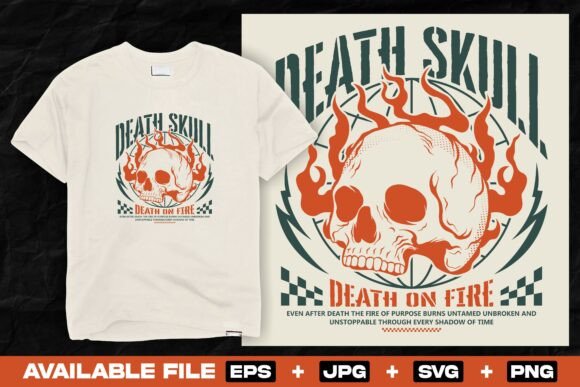
Burning Skull Urban Streetwear Design
When I sit down to evaluate a new machine embroidery design, I am rarely looking for something that simply "looks cool" on a screen. As a designer who frequently moves from digital assets to physical finished product creation, my primary concern is always execution. How will this hold up in the hoop? Will it translate well to different fabric textures? And most importantly, does it have the visual weight to stand alone as a statement piece without needing excessive embellishment?
This is where the Burning Skull Urban Streetwear Design caught my attention. Marketed under the categories of T-Shirt Designs and Graphics, this piece features a death skull typography paired with a burning head skull in an urban style. It is clearly intended for streetwear, merchandise, and print-on-demand applications, but its true test lies in how it behaves as an embroidery file. After reviewing the vector structure and simulating various stitch types, here is my practical assessment of how this design performs in real-world scenarios.
First Impressions: Mood and Visual Personality
The immediate vibe of the Burning Skull Urban Streetwear Design is aggressive yet stylized. The urban aesthetic is preserved through sharp angles and high-contrast elements, which is crucial for embroidery because soft, muddy lines often get lost in thread texture. The concept of a burning skull provides natural opportunities for dynamic stitching. The flames suggest movement, while the skull offers a solid, recognizable anchor point.
For designers specializing in custom apparel, this design strikes a balance between edgy and wearable. It does not rely on overly complex shading or tiny gradients that are difficult to replicate with standard thread colors. Instead, it leans into bold shapes and strong outlines. This makes it an excellent candidate for sweatshirt embroidery or heavy cotton tees where durability and visibility are key. The mood is perfect for brands targeting a younger, alternative demographic, offering a distinct identity that stands out in a crowded marketplace like Etsy or local craft fairs.
Real-World Application: Where This Design Shines
In my experience, the versatility of a design is determined by its adaptability across different products. The Burning Skull Urban Streetwear Design has several natural homes in a maker’s studio.
- Streetwear Apparel: This is the obvious choice. Whether placed centrally on the back of a heavyweight hoodie or left-chest sized on a tee, the graphic holds its own. The urban style translates well to the rougher texture of fleece or thick jersey knit.
- Accessories and Bags: I see significant potential here for a tote bag design. A canvas tote featuring this skull motif becomes more than just a carrier; it becomes a brand statement. The sturdy nature of canvas supports the density often required for such bold graphics.
- Patches and Badges: Because the design has a contained shape, it works exceptionally well as an embroidered patch. These can be ironed or sewn onto denim jackets, beanies, or backpacks, adding a layer of customization that customers love.
- Holiday and Gift Items: While not traditional Christmas decor, this design fits perfectly into niche holiday gifting. Think "Gothic Halloween," biker-themed gifts, or personalized presents for teens and young adults who appreciate dark aesthetics. It adds a premium feel to a personalized gift compared to printed alternatives.
Furthermore, for those selling digital product previews or printable mockups, this design offers high visual impact. It photographs well against neutral backgrounds, allowing the details of the typography and flame effects to pop. This is essential for Etsy sellers and small shop product creators who need their listings to convey quality instantly.
Technical Considerations and Stitch Behavior
Translating a graphic into stitches requires careful planning. The Burning Skull Urban Streetwear Design utilizes a mix of fill stitch areas for the main body of the skull and likely satin stitch for outlines and text to ensure crisp edges. However, the "burning" aspect introduces irregular shapes that must be managed carefully.
If you are using this for commercial embroidery or mass production, you must pay close attention to the stitch density. Areas where the flames taper off should not become too dense, or they may pucker the fabric. Conversely, the core of the skull needs enough coverage to look opaque and professional. I recommend testing the thread colors thoroughly. High contrast between the flame colors (yellows, oranges, reds) and the skull (blacks, greys, whites) is vital. On dark fabrics, lighter threads might require an underlay or a lighter base color to maintain vibrancy.
Another critical factor is the hoop size. Ensure your machine setup accommodates the full width of the typography and the spread of the flames. If the design is too large for your available hoops, you may need to split it, which can compromise the artistic integrity. Always check the recommended dimensions before committing to a project.
Where to Use Caution
No design is universal, and there are specific situations where the Burning Skull Urban Streetwear Design may struggle. Here are areas where you should exercise judgment:
- Small Hoop Sizes: Attempting to fit this detailed graphic into a very small hoop (under 4x4 inches) risks losing the nuance of the typography and the definition of the flames. The details may merge into a blob.
- Stretchy or Thin Fabrics: While this design works well on stable knits, extremely stretchy fabrics like thin spandex blends may distort the shape during stitching unless a heavy-duty stabilizer is used. Similarly, thin silks or delicate synthetics might show puckering.
- Curved Surfaces: Applying this to caps or hats requires a curved hoop attachment. The flat, urban layout might not wrap naturally around the curve of a baseball cap without warping the text. Test this on scrap material first.
- Frequent Washing: For items that will undergo rigorous washing, such as work aprons or children's clothing, ensure the thread quality is high. Dark threads on light fabrics can bleed, and the intricate details of the burn effect might wear down faster than simple geometric shapes.
Designer’s Checklist for Success
To ensure your embroidery project results in a professional-grade item, follow these practical steps before starting production:
- Test on Scrap Fabric: Never go straight to the final garment. Stitch the design on a similar fabric type to check for tension issues, puckering, or thread breaks.
- Review in Black and White: Convert your digital preview to grayscale. This helps you assess the value contrast. If the design looks muddy in black and white, it will likely look muddy in color when stitched.
- Check Licensing: Before creating any handmade product for sale, confirm the license terms. Does the purchase allow for commercial use of the finished goods? This is critical for craft business owners to avoid legal issues.
- Inspect Small Details: Zoom in on the typography. Are the letters legible? Is the kerning consistent? Poorly spaced text can make even a great graphic look amateurish.
- Select Proper Stabilizer: Use a cut-away stabilizer for stretchy fabrics and a tear-away for wovens, depending on the final use case. The right support prevents distortion.
Final Verdict
The Burning Skull Urban Streetwear Design is a strong addition to any library focused on urban fashion and edgy aesthetics. It offers a clear path to creating high-value design assets for both personal use and retail. Its strength lies in its boldness and clarity, making it easy for customers to recognize and appreciate the craftsmanship involved.
For creative entrepreneurs looking to expand their catalog, this design bridges the gap between digital graphics and tactile embroidery beautifully. By paying attention to fabric selection, stabilizer choice, and thread contrast, you can transform this graphic into a standout finished product that resonates with buyers seeking unique, handmade streetwear. Just remember to test thoroughly and respect the technical limits of your equipment to ensure every stitch counts.