Chupacabra Neon Glow Art Print Review
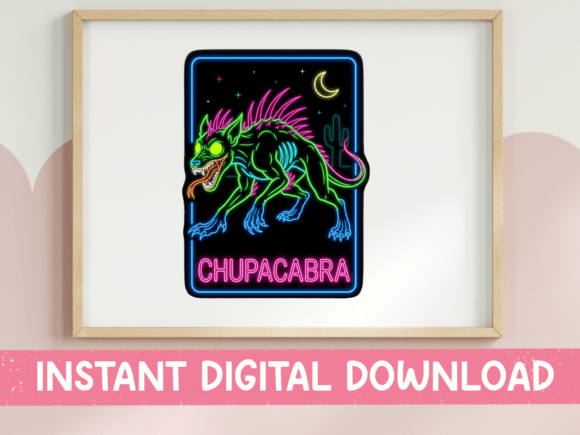
As a designer who spends half my life staring at stitch charts and the other half worrying about thread tension, I don’t just look at an image; I look at how it translates to fabric. When Chupacabra Neon Glow Art Print landed in my review queue, my first thought wasn't about its cryptid credentials, but about its viability as a commercial embroidery file. The description promises a glowing creature on a deep black background with vivid lime green rendering. For those of us working in T-Shirt Designs and digital Graphics, high-contrast neon aesthetics are a staple, but they are notoriously tricky to execute well in thread. This review breaks down whether this design holds up under the needle or if it’s better left as a screen print.
First Impressions: Mood and Visual Personality
The immediate visual impact of Chupacabra Neon Glow Art Print is undeniable. It taps into that specific vein of retro-cryptid nostalgia that performs exceptionally well in the handmade market. The crouching pose suggests tension and energy, which is excellent for a focal point. However, the "neon glow" aspect is where the real design challenge lies. In digital art, a glow is a simple filter. In machine embroidery, a glow is an illusion created by color blending, satin stitches, and negative space.
If executed correctly, this design has the potential to be a standout piece for custom apparel. The mood is edgy yet playful, making it suitable for a wide range of audiences, from hardcore cryptozoology fans to people who simply appreciate bold graphic art. The contrast between the deep black background and the lime green body creates a striking silhouette that reads clearly even from a distance. This is crucial for Etsy seller listings where customers often view products on small mobile screens before committing to a purchase.
Real-World Application: From Screen to Stitch
I recently considered using this design for a batch of custom embroidered patches intended for a boutique brand targeting young adults. The concept was to create a limited-run accessory that could be stitched onto denim jackets or canvas tote bag design options. Here is how Chupacabra Neon Glow Art Print performed in that practical scenario.
- Apparel Decorator Perspective: On a heavy cotton sweatshirt, the lime green thread pops beautifully against the dark fabric. The design works best when centered on the chest or placed prominently on the back. It adds a layer of personality to basic garments, transforming them into statement pieces without overwhelming the wearer.
- Giftability Factor: This design hits the sweet spot for personalized gifts. It is unique enough to feel special but not so obscure that it alienates buyers. It fits perfectly into holiday embroidery categories, particularly for Halloween or birthday gifts for teenagers and young adults who enjoy alternative culture.
- Craft Business Viability: For a small shop product, this design offers high perceived value. A well-executed neon-style embroidery looks premium. Customers associate complex color work and precise stitching with quality, which helps justify higher price points in your craft business.
Where to Use It (And Where to Hesitate)
While the design is strong, it is not a one-size-fits-all solution. There are specific contexts where Chupacabra Neon Glow Art Print might struggle.
Avoid placing this on textured fabrics like bouclé or thick chenille unless you have extensive experience stabilizing such materials. The fine details required to sell the "glow" effect can get lost in the weave. Similarly, thin or stretchy fabrics pose a risk. If the stabilizer isn't removed properly or if the hoop size is too tight, the lime green fill stitches may pucker, ruining the clean lines of the creature's crouch.
Another critical area to watch is small hoop sizes. While the design might scale down, the tiny details—especially around the claws and facial features—may become muddy. I recommend testing this on a medium to large hoop first. If you attempt to shrink it for a baby onesie or a tiny cap logo, you may lose the character entirely. For baby embroidery, simpler, bolder shapes usually yield better results than intricate neon-style graphics.
Technical Execution and Design Notes
For fellow designers evaluating this as a machine embroidery design, here are the practical considerations that separate a good project from a frustrating one.
- Thread Color Contrast: The success of this design hinges on the choice of thread. You cannot use a standard green; you need a high-lumen, fluorescent green to mimic the neon effect. Pairing this with a true black background thread is essential. If the background is navy or charcoal, the pop is diminished.
- Stitch Density and Stability: Check the stitch density of the fill areas. Dense fills can cause needle breakage or thread jams, especially with synthetic neon threads which can be slightly more brittle. Ensure you are using a cut-away stabilizer for woven fabrics to prevent distortion during washing.
- Detail Inspection: Zoom in on the corners of the design. Are there any isolated running stitches that might unravel? Is the satin stitch width appropriate for the digitized path? Poorly digitized satin stitches can look lumpy rather than smooth.
- Mockup Testing: Before stitching the final piece, run a black-and-white mockup. Does the shape still read as a Chupacabra? If the design relies solely on color to define the form, it will fail when printed or viewed in low light. The silhouette must stand on its own.
Commercial Licensing and Usage
As a commercial embroidery asset, licensing is paramount. Always confirm the terms before selling finished items. Some digital embroidery file licenses restrict the number of units you can produce, while others may prohibit resale entirely. As a design assets reviewer, I advise checking the license agreement carefully. If you plan to use this for personalized gift orders, ensure the license covers end-product sales.
Final Verdict
Chupacabra Neon Glow Art Print is a compelling design for the right maker. It bridges the gap between digital graphic trends and tactile handmade crafts effectively. It is ideal for custom apparel, embroidered patch collections, and trendy tote bag design projects. However, it demands technical precision. It is not a beginner-friendly design due to the need for high-contrast threading and careful stabilization.
If you are an experienced embroiderer looking to add some edge to your handmade product lineup, this design is worth the test stitch. Just remember to respect the limits of the hoop size and the fabric texture. When done right, the result is a vibrant, eye-catching piece that captures the imagination of your customers and elevates your brand presence in the craft business.