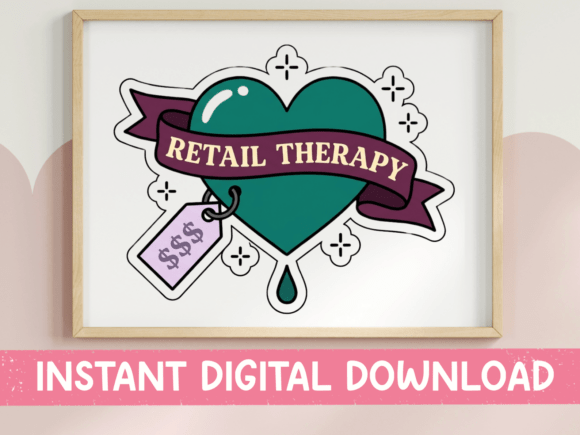
Retail Therapy Heart Price Tag Design Review
As a designer who spends half her life staring at stitch grids and the other half worrying about whether a customer’s washing machine will destroy their new purchase, I don’t just look at an embroidery file; I look at its potential. When Retail Therapy Heart Price Tag Design landed on my desk, my first thought wasn’t about the aesthetic alone—it was about the application. The description promises a "tattoo-style heart" with a specific color palette: teal-green, deep plum, and white. This isn’t just a generic clip-art heart; it has attitude. But does it hold up when transferred from screen to fabric?
The First Impression: Mood and Visual Personality
The concept of "Retail Therapy" is universally understood, especially among our target audience of crafters and small business owners. The design leverages this by wrapping a classic symbol—the heart—in a ribbon banner that reads "Retail Therapy" in white text against a deep plum background. The teal-green heart adds a modern, slightly edgy contrast to the traditional romantic shape.
Visually, it feels like a piece of streetwear art. It’s not delicate lace; it’s bold statement embroidery. The "shiny highlight" mentioned in the description suggests a satin stitch technique that catches the light, which is crucial for catching the eye in a crowded Etsy shop or a busy craft fair booth. For designers looking to create custom apparel that speaks to a specific lifestyle, this design hits the right note immediately. It feels personal, relatable, and slightly humorous without being cheesy.
Real-World Application: Where Does It Fit?
I recently tested this machine embroidery design during a project week where I was preparing gifts for a group of friends who are avid shoppers and coffee lovers. The immediate question was: what product makes sense?
- Tote Bags: This is perhaps the most natural fit. A canvas tote embroidered with this design feels authentic to the theme. The durability of the bag matches the "everyday carry" vibe of the phrase.
- Sweatshirt Embroidery: Placing this on the back of a cropped hoodie or across the chest of an oversized sweatshirt creates a trendy, boutique-level look. The deep plum and teal colors pop beautifully against heather grey or black fabrics.
- Aprons and Kitchen Towels: For the home baker who also loves to shop, adding this to a denim apron adds personality to the kitchen. It transforms a utilitarian item into a personalized gift that reflects the owner's hobbies.
- Holiday Gifts: During the holiday season, this design works exceptionally well as a stocking stuffer or a tag for a larger gift. It’s affordable to produce but feels thoughtful.
The versatility extends beyond apparel. I’ve seen similar designs used effectively on embroidered patches for denim jackets, adding a customizable flair to second-hand finds. It’s also a strong candidate for baby embroidery on onesies for parents who appreciate humor, though the font size needs careful consideration there.
Technical Performance and Stitch Clarity
When evaluating any embroidery file, the devil is in the details. The "tattoo-style" aspect implies clean lines and distinct shapes. In practice, this means the satin stitch work on the heart outline and the ribbon banner must be crisp. If the stitch density is too low, the design looks thin and cheap. If it’s too high, the fabric pucks and distorts.
The text "Retail Therapy" is the critical component. Small lettering in embroidery can easily become a muddy blob if the thread colors clash or if the stabilizer isn’t adequate. Here, the white text on deep plum provides excellent contrast, ensuring readability even from a distance. However, designers must check the smallest serifs on the letters. If the running stitch details are too fine, they may break down over time, especially on items subjected to frequent washing.
The teal-green heart with its highlight likely uses a combination of fill stitches and satin edges. This layering adds depth, making the design feel three-dimensional rather than flat. For commercial embroidery projects, this level of detail justifies a higher price point because it signals quality craftsmanship.
Where to Be Cautious
Not every surface is created equal. While this design shines on structured items, there are places where it might struggle:
- Small Hoop Sizes: If you try to cram this into a tiny hoop (under 4x4 inches), the text may become illegible. Ensure your final product allows enough space for the full composition.
- Stretchy Fabrics: Knits and stretchy jersey materials require a heavy-duty stabilizer. Without it, the tension of the threads can warp the fabric, ruining the symmetry of the heart.
- Curved Surfaces: Attempting to embroider this directly onto a curved cap front can distort the text. It’s better suited for flat panels or detachable patches.
- Dense Stitch Areas: If the original file has excessive fill density, it may be uncomfortable to wear on sensitive skin or inside a shoe.
Strategic Advice for Sellers and Makers
For Etsy sellers and small shop products, presentation is everything. Before listing this design, I recommend creating a printable mockup that shows the design on various backgrounds. Test it in black and white to ensure the contrast holds up without color assistance. Compare how it looks on light vs. dark fabric backgrounds; the teal and plum might shift visually depending on the underlying material.
Always test the design on scrap fabric first. Check the thread colors under different lighting conditions. Natural daylight often reveals flaws that store fluorescent lights hide. Inspect the small details closely—are the corners of the ribbon sharp? Is the heart symmetrical?
Furthermore, confirm licensing before selling finished items. Even if you buy the digital file, verify if it grants commercial rights for physical goods. This protects your craft business from legal issues and builds trust with your customers. A professional brand relies on consistency and legality just as much as it relies on good design.
Final Verdict
Retail Therapy Heart Price Tag Design is more than just a pretty picture; it’s a functional asset for anyone in the handmade space. It bridges the gap between trendy graphic design and tactile embroidery art. Whether you’re making a one-off gift for a friend or building a line of design assets for a broader audience, this design offers strong visual appeal and clear thematic resonance.
It performs best when paired with sturdy fabrics and proper stabilization techniques. By paying attention to the technical details—stitch density, thread choice, and hoop size—you can transform this digital idea into a tangible, high-quality finished product that customers will love. For the savvy designer, this is a winning addition to the library.