Make America Cowboy Again Vintage Vector Review
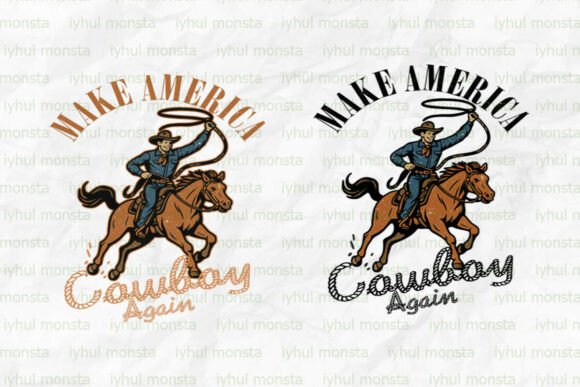
As a designer who spends half my life staring at stitch charts and the other half troubleshooting tension issues on vintage machines, I don’t just look at an embroidery file; I look at how it will behave under the needle. When Make America Cowboy Again Vintage Vector landed in my inbox, my first instinct was to check the line weight and the negative space. This isn’t just another generic western clipart file; it is a bold illustration that demands respect from both the digitizer and the end user. It features a classic American cowboy riding a galloping horse, swinging a lasso with confidence and strength. Inspired by vintage western art, the design celebrates the spirit of rugged individualism, but the real question for any craft business owner or hobbyist is: does it translate well to thread?
First Impressions and Visual Personality
The immediate mood of this piece is unmistakable. It carries that dusty, nostalgic charm of old saloon posters mixed with the dynamic energy of a rodeo action shot. The composition is centered and strong, which is exactly what you want when you are placing a focal point on a garment or accessory. The "vintage vector" aspect suggests clean lines, which is a huge plus for machine embroidery because it reduces the likelihood of jagged edges or unnecessary complexity.
Visually, the cowboy and horse create a unified silhouette. For those of us who have struggled with designs where the rider gets lost against the horse’s legs, this separation is thoughtful. The lasso adds a nice diagonal element that breaks up the verticality, giving the eye somewhere to travel. It feels confident without being cluttered. This is not a delicate floral piece; it is a statement graphic. That distinction matters immensely when you are deciding whether this belongs on a baby onesie or a heavy-duty work shirt.
Real-World Application: Where Does This Fit?
I recently evaluated this design with the intention of creating a custom embroidered tote bag for a local craft fair booth. The goal was to appeal to customers who appreciate Americana but also want something wearable and usable. Here is how Make America Cowboy Again Vintage Vector performed in that scenario.
Apparel and Sweatshirts
This design shines on medium-to-heavyweight fabrics. A cotton-poly blend sweatshirt is the ideal canvas. The bold nature of the cowboy motif stands up well against the texture of fleece or jersey knit. On a t-shirt, it works best as a chest placement or a full-back print. Because the design has such strong visual weight, it doesn’t get swallowed up by the fabric. It reads clearly from a few feet away, which is crucial for retail visibility. However, be cautious with thin fabrics; the density required to hold the shape of the horse might cause puckering if you don’t use a high-quality cut-away stabilizer.
Tote Bags and Aprons
For the tote bag project, I used a natural canvas bag. The contrast between the dark thread colors typically used in vintage western themes and the light canvas created a striking, professional look. It felt like a boutique item rather than a mass-produced souvenir. Similarly, on a kitchen apron, this design adds personality to a functional item. It appeals to the home cook who loves rustic decor. The durability of the stitching holds up well to the wear and tear of a busy kitchen, making it a practical handmade product.
Patches and Caps
If you are looking to create an embroidered patch, this design translates beautifully. The clear outline makes it easy to add a border, and the central focus ensures it looks good even when shrunk down slightly. For caps, the curved surface can be tricky, but the balanced composition of the cowboy and horse helps maintain symmetry. Just ensure your hoop size accommodates the curve of the cap correctly to avoid distortion.
Products to Approach with Caution
While this design is versatile, it is not a one-size-fits-all solution. There are specific scenarios where Make America Cowboy Again Vintage Vector might struggle:
- Small Hoop Sizes: If you attempt to stitch this on a very small area, such as a baby hat brim or a tiny keychain tag, the details may become muddy. The horse’s legs and the lasso loops need enough room to breathe.
- Textured or Stretchy Fabrics: Avoid using this on highly textured fabrics like boucle wool or very stretchy spandex blends unless you are experienced with stabilizers. The tension required to keep the design flat might distort the fabric underneath.
- Dense Stitch Areas: Check the stitch density before committing to a final run. If the fill stitches are too dense, the finished product can feel stiff and plastic-like, especially on items that need to drape softly, like a lightweight scarf.
- Frequent Washing: While generally durable, any design with large areas of satin stitch should be tested for wash-fastness. Dark threads on light fabrics can sometimes fade or bleed over time, so pre-washing your fabric is essential.
Technical Considerations for the Designer
Before you load this file into your machine, there are several practical steps every designer should take. First, inspect the stitch density. Look closely at the horse’s mane and the folds in the cowboy’s clothing. Are there unnecessary jumps? Is the underlay sufficient to prevent the fabric from shifting? If the design uses too many running stitches in tight spaces, it may look sparse after washing.
Thread color selection is critical here. Since the inspiration is vintage western art, earth tones, deep reds, navy blues, and creams work best. Avoid neon threads, as they will clash with the intended aesthetic. Test your thread colors on scrap fabric that matches your final material. Lighting can deceive you; a thread that looks perfect on your computer screen might look dull under store lighting.
Another vital step is to review the design in black and white mockups. This helps you see the true contrast and balance of the shapes without the distraction of color. If the design loses its impact in grayscale, it might rely too heavily on color rather than form. In this case, the strong silhouettes hold up well even in monochrome, which is a sign of good digitizing.
Impact on Brand and Customer Trust
For Etsy sellers and small shop owners, the quality of your design directly impacts customer trust. A sloppy embroidery job can lead to returns and bad reviews, while a crisp, well-executed design builds brand loyalty. Using a clean, well-composed graphic like Make America Cowboy Again Vintage Vector signals professionalism. It shows that you care about the details.
This design also has strong giftability. Whether it is a holiday gift for a rancher, a wedding gift for a couple who loves country music, or a personalized gift for a child’s nursery, the theme resonates emotionally. It taps into a sense of tradition and adventure. When customers see a finished product that captures that spirit accurately, they are more likely to engage with your brand and leave positive feedback.
Final Verdict
Make America Cowboy Again Vintage Vector is a robust, visually appealing design asset that offers great potential for various embroidery projects. It balances artistic flair with technical feasibility, making it suitable for everything from casual apparel to serious commercial merchandise. However, success depends on proper execution. Always test on scrap fabric, choose the right stabilizer, and select complementary thread colors.
Remember to confirm the licensing terms before selling finished items or digital products. Ensure you understand the scope of commercial use rights associated with the digital embroidery file. By approaching this design with careful planning and attention to detail, you can create custom apparel and personalized gifts that stand out in a crowded market. It is a solid addition to any craft business library, offering both aesthetic appeal and practical versatility for the discerning embroiderer.