Watermelon Slice Vector Set for Beach
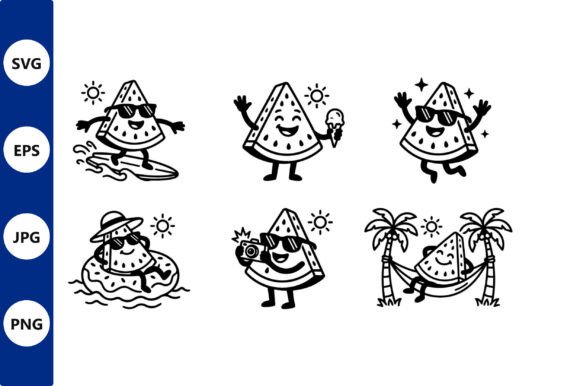
When I sit down to evaluate a new embroidery design, I am rarely looking for something that simply looks good on a screen. My primary concern is always practicality: how will this translate to the hoop? Will it hold up after twenty washes? Does it have enough visual personality to justify the time and thread cost on a finished product? Recently, I spent some time analyzing the Watermelon Slice Vector Set for Beach, an Illustrations and Graphics asset that promises summer vibes with a twist of playful character. This isn't just a static fruit slice; it is a collection of vector watermelon slices featuring cheerful poses, sunglasses, and activities ranging from surfing to photographing under palm trees.
As a designer who frequently creates assets for small business owners and Etsy sellers, I find this set particularly intriguing. It moves beyond the generic "summer sale" aesthetic and offers distinct narrative potential. However, moving from a clean vector file to a stitched handmade product requires careful planning. Here is my honest review of how this design performs in real-world embroidery scenarios.
The First Impression: Mood and Visual Personality
The immediate appeal of the Watermelon Slice Vector Set for Beach lies in its attitude. Most watermelon designs are straightforward representations of the fruit—perhaps with a few seeds or a simple rind. This set, however, imbues the slices with human-like behavior. One might be holding a camera, another catching a wave, and others simply lounging. For a creative entrepreneur or a maker looking to add uniqueness to their inventory, this narrative depth is valuable. It transforms a simple motif into a character-driven design.
The black and white vector nature of the source material is a double-edged sword. On one hand, it offers extreme versatility. You can adapt the color palette to match any brand identity, whether it is pastel pinks for a nursery line or bold neons for a surf shop. On the other hand, because the source is monochrome, the final impact relies entirely on your choice of thread colors. The contrast between the red pulp, green rind, and black seeds must be managed carefully to ensure the details do not get lost in the stitching process.
Real-World Application: Where This Design Shines
I envision this embroidery project fitting seamlessly into several specific categories. The most obvious application is custom apparel. A sweatshirt embroidery featuring a watermelon slice wearing sunglasses captures a relaxed, coastal vibe that resonates well with customers seeking comfort and style. Similarly, a tote bag design using these characters could serve as excellent merchandise for beach-themed events or summer festivals.
For those in the baby and nursery niche, the playful poses offer a softer, more whimsical angle. A baby embroidery on a muslin blanket or a onesie can utilize the "lounging" character to create a gentle, humorous piece. Parents often look for items that are both cute and conversation-starting, and the unique activity-based poses provide that hook.
Furthermore, this set is ideal for personalized gift markets. Imagine a customized apron for a hostess gift, where the watermelon is "photographing" the kitchen scene, or a patch for a denim jacket that signifies a love for summer adventures. The versatility allows you to create a cohesive collection—a small shop product line that feels curated rather than random.
Technical Considerations and Potential Pitfalls
While the concept is strong, executing it successfully requires attention to technical detail. Not all surfaces are created equal. If you plan to use this on a curved surface like a cap or a hat, the distortion of the vector shape must be accounted for during digitizing. The cheerful poses may look distorted if the curve is too aggressive, so testing on a mockup is essential.
Another critical area is fabric texture. Embroidering on highly textured fabrics, such as heavy canvas or bouclé, can obscure the finer details of the vector lines. The sunglasses and facial expressions need clear definition to read correctly. If the stitch density is too low, the features might blur together. Conversely, if the design is too dense, it may become stiff and uncomfortable against the skin, which is a significant drawback for items like custom apparel or baby clothes.
You must also consider the background fabric. Since the original vectors are black and white, placing them on dark fabric requires careful selection of underlay stitches and possibly a backing layer to prevent the dark fabric from showing through the lighter threads. For commercial embroidery projects, consistency is key. If you are producing fifty units, ensuring that the stitch density remains uniform across all pieces is vital for maintaining a professional appearance.
Stitch Types and Clarity
The success of this design hinges on the balance of stitch types. The outlines likely require a robust satin stitch to define the shape of the watermelon and the accessories. However, large areas of fill might make the design heavy. A combination of fill stitch for the main body and running stitch for smaller details like seeds or camera straps can help reduce bulk while maintaining clarity. If the design includes applique elements, such as a separate rind piece, it can add dimension but increases the complexity of the setup.
Practical Designer Notes for Execution
Before committing to a full production run, I strongly advise testing the embroidery file on scrap fabric that matches your final product. This allows you to inspect how the thread colors interact with the fabric weave. Check the small details closely—are the sunglasses distinct? Is the palm tree recognizable? Sometimes, what looks clear in a vector program becomes muddy when stitched at 4 inches wide.
Always confirm the licensing terms before selling finished items. While the description identifies this as Illustrations and Graphics, commercial rights vary. Ensure you have the permission to sell products made from this design, especially if you are an Etsy seller or running a craft business.
Finally, think about the presentation. A printable mockup of this design on various products can help you gauge customer interest before investing in materials. The unique poses allow for diverse marketing angles—highlighting the "surfer" for outdoor brands or the "photographer" for creative communities. By paying attention to these details, you can transform a simple vector set into a high-value, professional finished product that stands out in a crowded market.